
Call: 08037736578
 Send Inquiry
 Send Inquiry
WATER INJECTOR
Price 4095.0 INR/ Number
MOQ : 1 Number
WATER INJECTOR Specification
- Product Type
- INJECTOR
- Material
- Other
- Surface Treatment
- Other
- Paint Finishing
- MS
- Color
- BLUE
- Warranty
- 1 YEAR
WATER INJECTOR Trade Information
- Minimum Order Quantity
- 1 Number
- Delivery Time
- 1 Days
About WATER INJECTOR
A Venturi Injector, commonly referred to as an Injector, is a hydraulic device widely used in water treatment systems for the efficient injection and mixing of gases, chemicals, and liquid additives into a flowing water stream. It operates without any moving parts by utilizing the pressure differential created through the Venturi principle. This simple yet highly effective device is extensively used in Reverse Osmosis (RO) plants, Ultra Filtration (UF) systems, Ozone generation systems, chemical dosing systems, swimming pools, wastewater treatment plants, cooling towers, aquaculture, and industrial process water applications.
The injector creates a vacuum by accelerating water through a specially designed constricted throat. This vacuum draws chemicals or gases into the water stream, ensuring rapid mixing and efficient transfer without the need for additional pumping equipment in many applications.
Venturi injectors are particularly suitable for injecting ozone, chlorine, sodium hypochlorite, acids, alkalis, carbon dioxide, hydrogen peroxide, fertilizers, and various treatment chemicals. Due to their compact design, reliability, low maintenance, and excellent mixing efficiency, they have become an essential component in modern water treatment systems.
Working Principle
The Venturi Injector operates on Bernoulli's Principle, which states that when the velocity of a fluid increases, its pressure decreases.
The operating sequence is as follows:
Pressurized water enters the injector.
The flow passes through a converging section where the internal diameter decreases.
As the passage narrows, the water velocity increases significantly.
The pressure drops at the throat of the injector, creating a vacuum.
The vacuum draws chemical or gas through the suction port.
The injected chemical mixes with the high-velocity water stream.
The mixture passes through the diffuser section, where pressure is partially recovered before exiting the injector.
This process enables efficient chemical dosing and gas dissolution without moving mechanical components.
Major Components
A standard Venturi Injector consists of:
Inlet Section
Converging Nozzle
Venturi Throat
Suction Port
Diffuser Section
Outlet Connection
Check Valve (Optional)
Injection Hose
Mounting Connections
Optional accessories include:
Vacuum Gauge
Flow Meter
Pressure Gauge
Isolation Valves
Non-Return Valve
Chemical Suction Strainer
Flow Control Valve
Construction Materials
Material selection depends on the type of chemical and operating conditions.
Common materials include:
Polypropylene (PP)
PVDF (Polyvinylidene Fluoride)
PVC
UPVC
CPVC
Stainless Steel SS304
Stainless Steel SS316
PTFE (Teflon)
Ceramic (special applications)
Seals are typically manufactured from:
EPDM
Viton
PTFE
Silicone
These materials provide excellent resistance to corrosion and aggressive chemicals.
Types of Injectors
Water-Driven Venturi Injector
Operates using line water pressure.
Most common in water treatment.
No external power required.
Suitable for chemical dosing and gas injection.
Ozone Injector
Specially designed for:
High ozone transfer efficiency.
Fine bubble generation.
Reduced ozone loss.
Improved oxidation performance.
Chemical Injector
Used for:
Acid dosing.
Alkali dosing.
Chlorination.
Antiscalant dosing.
Polymer injection.
Fertigation Injector
Widely used in:
Agriculture.
Greenhouses.
Irrigation systems.
Hydroponics.
Typical Operating Parameters
Operating Pressure: 110 bar
Differential Pressure: Typically 2030% of inlet pressure
Flow Capacity: From a few liters per hour to several hundred cubic meters per hour
Suction Capacity: Depends on injector size and pressure differential
Operating Temperature: 5C to 60C (material dependent)
Chemical Compatibility: Based on construction material
Features
No moving parts.
Self-priming operation.
Simple installation.
Compact design.
Continuous in-line dosing.
Uniform mixing.
Corrosion-resistant materials.
Energy-efficient.
Maintenance-free operation.
Long service life.
Suitable for gas and liquid injection.
High reliability.
Easy integration into existing systems.
Advantages
Venturi Injectors offer numerous benefits over conventional injection methods:
Operate without motors or mechanical drives.
Low installation and operating costs.
Minimal maintenance.
High mixing efficiency.
Uniform chemical distribution.
Reliable continuous operation.
Excellent gas dissolution capability.
Suitable for corrosive chemicals.
Compact and lightweight.
No electrical power required for the injector itself.
Long operational life.
Reduced risk of mechanical failure.
Easy replacement and servicing.
Water Treatment Applications
Venturi Injectors are extensively used in municipal and industrial water treatment plants.
Ozone Injection
One of the most common applications is ozone transfer into water.
Benefits include:
High ozone dissolution efficiency.
Better oxidation.
Effective disinfection.
Reduced ozone wastage.
Improved contact efficiency.
Reverse Osmosis (RO) Systems
Applications include:
Antiscalant dosing.
Sodium Metabisulfite (SMBS) injection.
pH correction.
Cleaning chemical injection.
Product water mineral dosing.
Chlorine neutralization.
Ultra Filtration (UF) Systems
Used for:
Coagulant dosing.
Polymer injection.
Cleaning chemical circulation.
pH adjustment.
Chemical Enhanced Backwash (CEB).
Drinking Water Treatment
Applications include:
Chlorination.
Sodium hypochlorite dosing.
Ozone injection.
pH correction.
Fluoride dosing (where applicable).
Taste and odor control.
Wastewater Treatment
Venturi Injectors are used for:
Chemical oxidation.
Ozone treatment.
Polymer dosing.
Neutralization.
Nutrient dosing.
pH adjustment.
Disinfection.
Swimming Pools
Applications include:
Ozone injection.
Chlorine dosing.
pH correction.
Algaecide injection.
Water conditioning.
Cooling Towers
Used for:
Biocide dosing.
Corrosion inhibitor injection.
Scale inhibitor dosing.
Ozone treatment.
Chlorination.
Aquaculture
Applications include:
Oxygen injection.
Ozone dosing.
Carbon dioxide injection.
Water quality improvement.
Food & Beverage Industry
Used for:
Ozone sanitation.
Process water treatment.
Chemical dosing.
Beverage water conditioning.
Cleaning chemical injection.
Pharmaceutical Industry
Applications include:
Purified water systems.
Sanitization.
Ozone distribution.
CIP chemical dosing.
Process water conditioning.
Agriculture
Venturi Injectors are widely used for:
Fertigation.
Nutrient dosing.
Liquid fertilizer injection.
Acid dosing.
Irrigation system treatment.
Chemical Industry
Applications include:
Acid injection.
Alkali dosing.
Catalyst addition.
Process chemical blending.
Oxidizing chemical injection.
Factors Affecting Performance
Injector performance depends on:
Water pressure.
Pressure differential.
Flow rate.
Injector size.
Chemical viscosity.
Water temperature.
Pipe diameter.
Installation orientation.
Back pressure.
Suction line length.
Type of chemical or gas being injected.
Proper sizing is essential to achieve the required suction rate and mixing efficiency.
Installation Guidelines
For optimum performance:
Install in the correct flow direction.
Maintain adequate pressure differential.
Use a non-return valve on the suction line.
Keep the suction line as short as possible.
Ensure all joints are airtight.
Install isolation valves for maintenance.
Provide adequate filtration upstream if water contains debris.
Maintenance
Although Venturi Injectors require very little maintenance, routine inspection should include:
Cleaning the injector throat to remove scale or deposits.
Checking the suction port for blockages.
Inspecting seals and O-rings.
Verifying pressure differential.
Cleaning the chemical suction strainer.
Checking for leaks.
Replacing worn components when necessary.
Because there are no moving parts, maintenance costs are minimal.
Safety Considerations
When handling treatment chemicals:
Use compatible materials for the injector and piping.
Install a non-return valve to prevent backflow into chemical tanks.
Follow chemical handling procedures.
Wear appropriate personal protective equipment (PPE).
Ensure proper ventilation when injecting ozone or other gases.

Tell us about your requirement

Price:
Quantity
Select Unit
- 50
- 100
- 200
- 250
- 500
- 1000+
Additional detail
Mobile number
Email

More Products in Injector Category
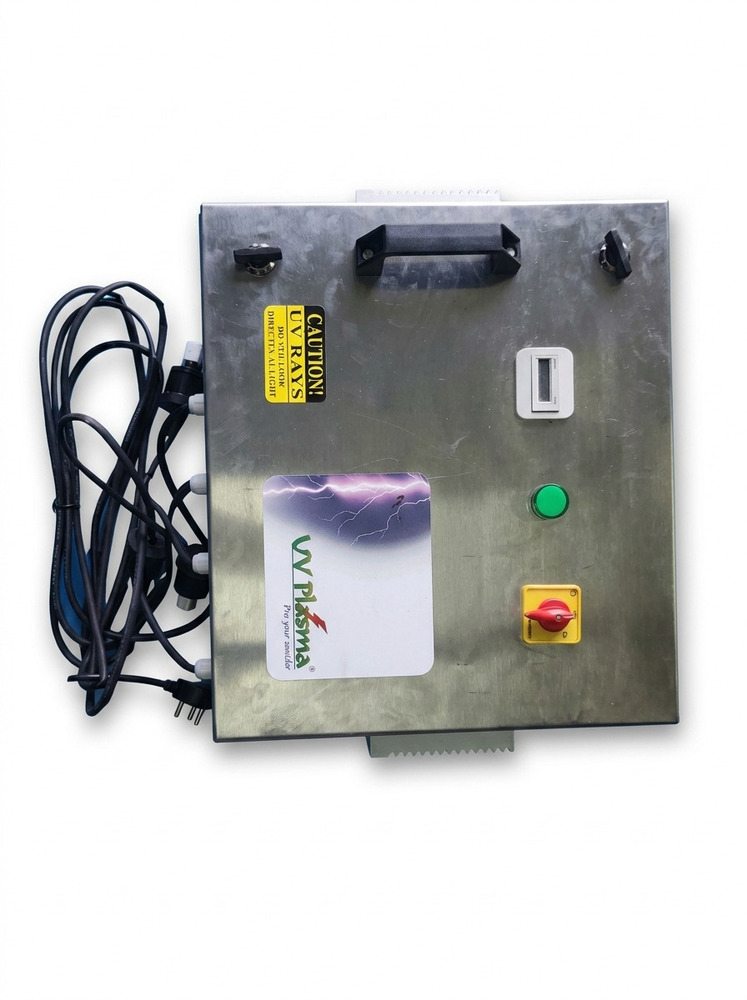
HF60-3 Panel Box
Minimum Order Quantity : 1 Unit
Paint Finishing : Matte Finish
Weight : 5.2 kg
Product Type : Panel Box
Protection Level : IP65
External Size : 430 mm x 400 mm x 200 mm

Contact Details
Shakunth Aqua Products
GST : 33AHAPP9775C1Z9
- OLD 86/9A, NEW 30A, VANAGARAM ROAD, ATHIPET, AMBATTUR INDUSTRIAL ESTATE,Chennai - 600058, Tamil Nadu, India
- Phone :08037736578
 Send Inquiry
Developed and Managed by Infocom Network Private Limited.
