
Call: 08037736578
 Send Inquiry
 Send Inquiry
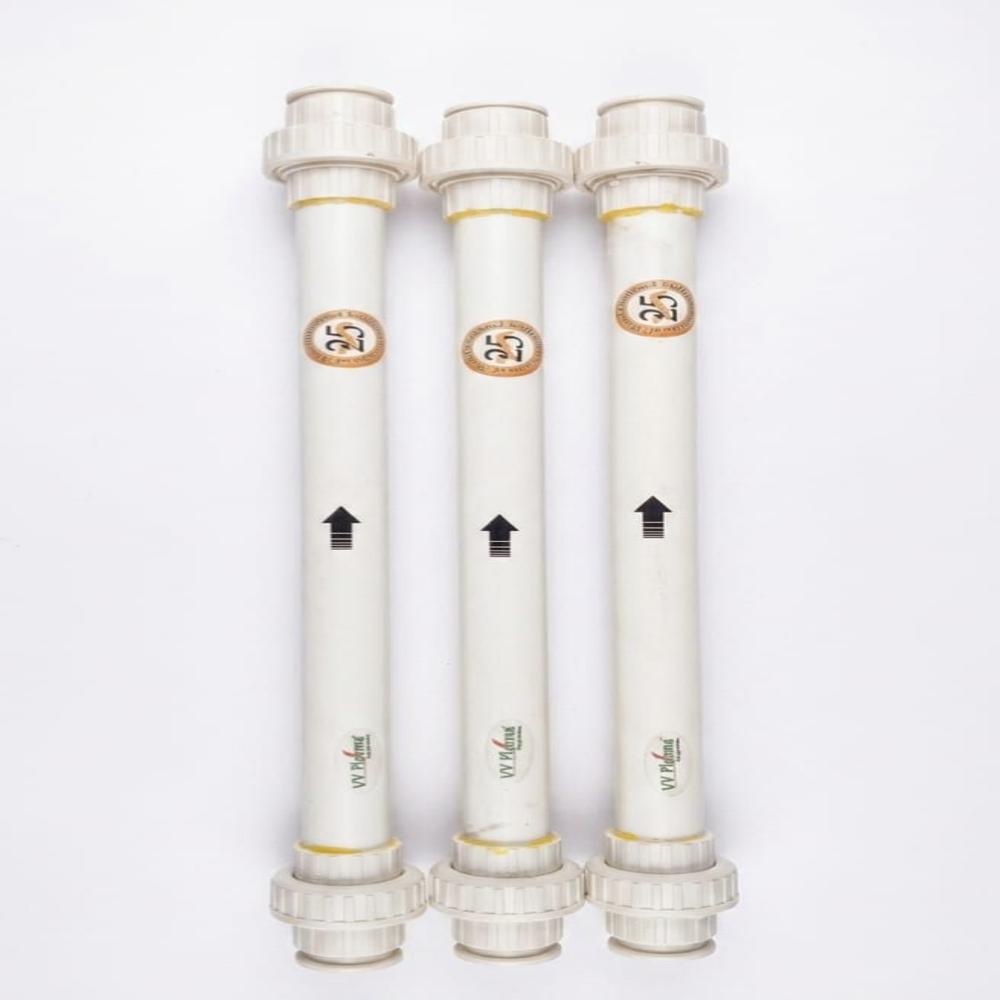
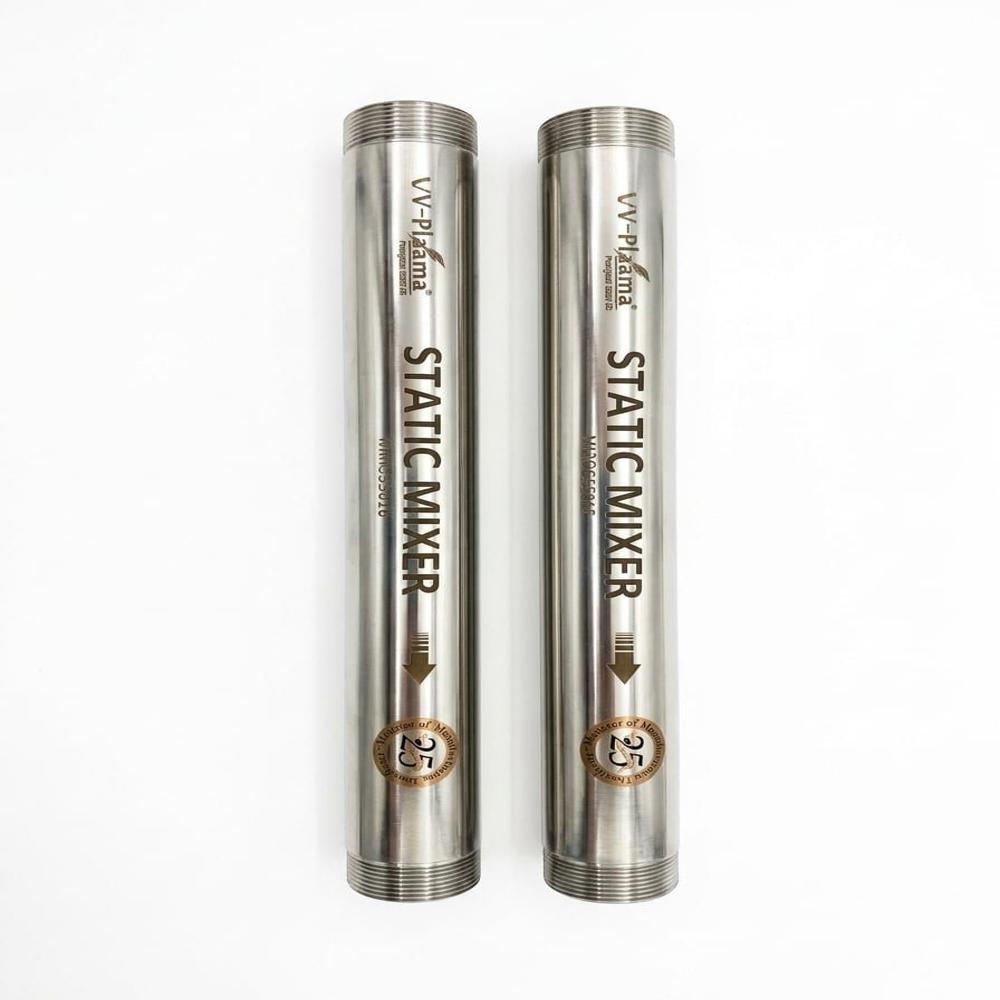
Static Mixer
Price 5000.00 INR/ Number
MOQ : 1 Piece
Static Mixer Specification
- Installation Type
- Oline
- Capacity
- 5 Ltr/hr
- Material
- SS,PVC
- Application
- water and Waste water
- Power
- Horsepower (HP)
- Treatment Technique
- Non Electrical
- Water Source
- Water & wastewater
- Ph Level
- 2-11
- Product Type
- Other
- Technology
- Mixing elements
- Operation Type
- Semi Automatic
- Pressure
- 100 PSI
- Dimension (L*W*H)
- 0.5 Meter (m)
- Weight
- 1 Kilograms (kg)
- Warranty
- 1
Static Mixer Trade Information
- Minimum Order Quantity
- 1 Piece
- Delivery Time
- 12 Hours
Static Mixer About
Static Mixer Detailed Description and Applications
Introduction
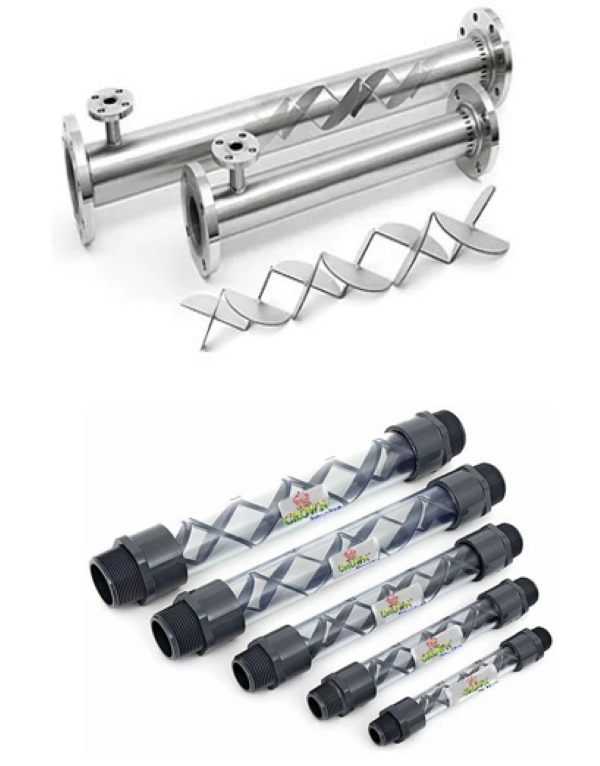
A Static Mixer is a highly efficient, non-moving mechanical mixing device designed to continuously blend two or more fluids, gases, or chemicals as they flow through a pipeline. Unlike conventional mechanical mixers that require rotating impellers, motors, shafts, or agitators, a static mixer achieves homogeneous mixing by utilizing a series of specially engineered stationary mixing elements installed inside a pipe or housing.
As fluids pass through these fixed elements, they are repeatedly divided, rotated, redirected, and recombined, creating controlled turbulence or laminar mixing depending on the flow conditions. This process results in rapid and uniform mixing without any moving parts, making static mixers extremely reliable, energy-efficient, and maintenance-free.
Static mixers are widely used in water treatment, wastewater treatment, chemical processing, pharmaceuticals, food and beverage industries, oil and gas, pulp and paper, power plants, mining, and many other industrial processes where efficient in-line mixing is required.
Working Principle
The operating principle of a static mixer is based on continuous fluid division and recombination.
As fluid enters the mixer:
- The flow passes through specially designed stationary mixing elements.
- Each element splits the fluid stream into multiple layers.
- The divided streams are redirected and rotated.
- Successive elements continuously recombine and divide the flow.
- This repeated action produces highly uniform mixing over a short distance.
The mixing mechanism depends upon the flow regime:
Laminar Flow Mixing
In laminar flow, mixing occurs through:
- Layer splitting
- Radial displacement
- Molecular diffusion
- Flow inversion
The fluid is continuously divided into thinner layers, significantly increasing the contact area and improving mixing efficiency.
Turbulent Flow Mixing
Under turbulent flow conditions:
- Eddies are generated.
- Flow direction changes rapidly.
- Turbulence enhances dispersion.
- Uniform mixing occurs within a short pipeline length.
This provides excellent blending efficiency with minimal pressure loss.
Construction
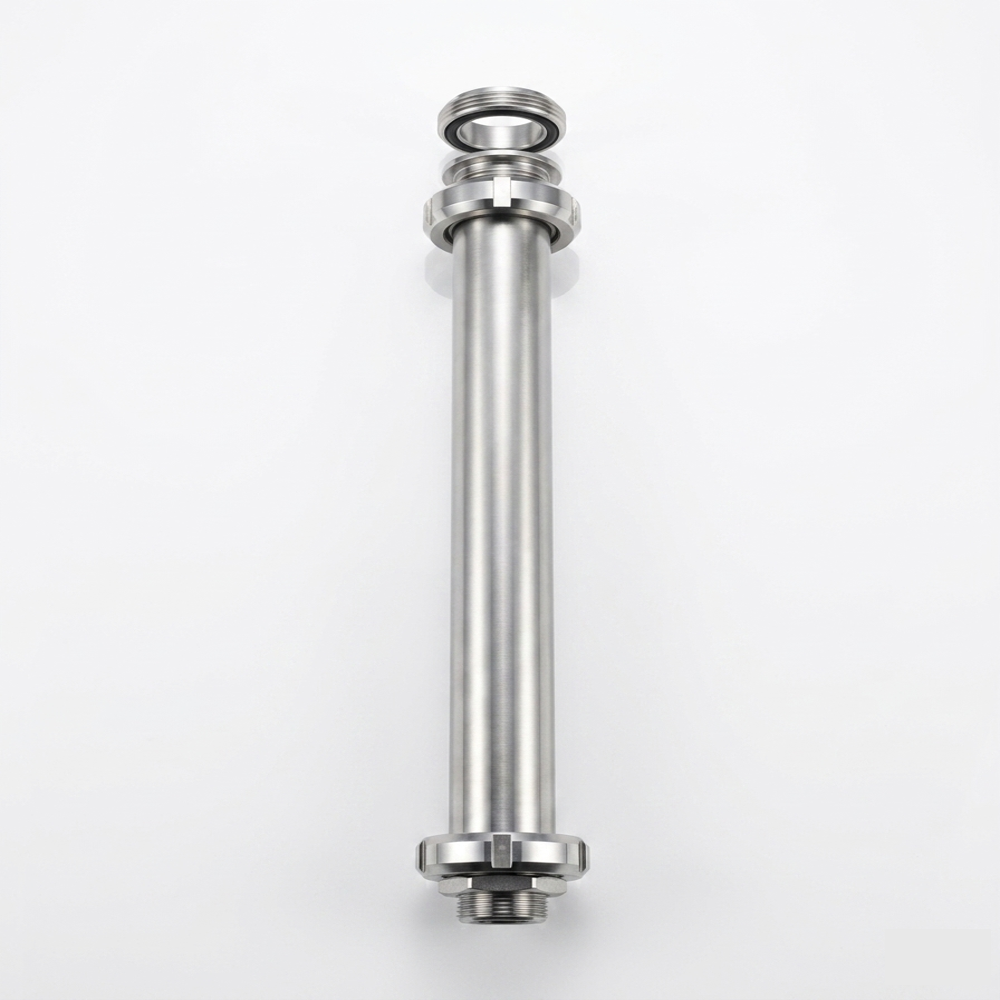
A static mixer typically consists of:
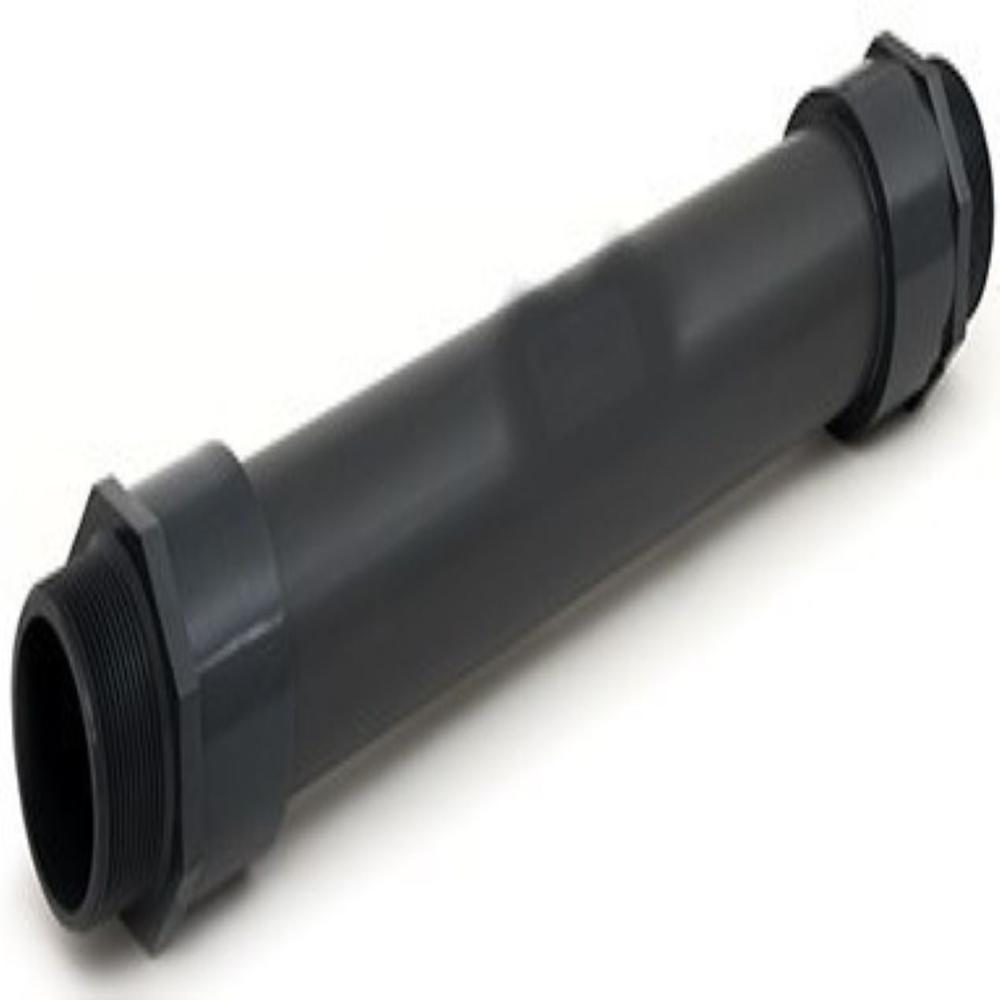
- Mixing Housing or Pipe Section
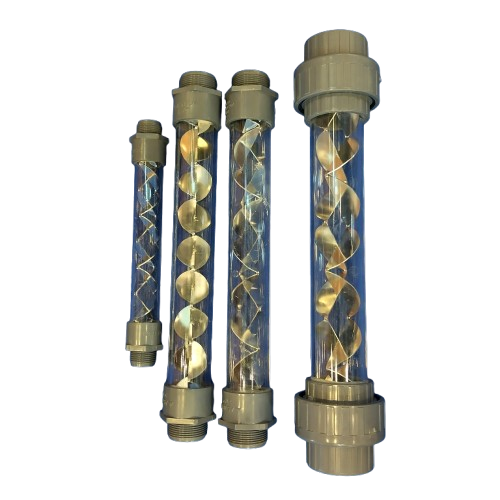
- Stationary Mixing Elements
- Inlet Connection
- Outlet Connection
- Flanged or Threaded Ends
- Support Rings (where applicable)
The mixer elements are permanently fixed inside the pipe and require no external power.
Materials of Construction
Static mixers are manufactured using a variety of corrosion-resistant materials depending on the process fluid.
Common materials include:
- Stainless Steel SS304
- Stainless Steel SS316
- Stainless Steel SS316L
- Duplex Stainless Steel
- Carbon Steel
- PVC
- UPVC
- CPVC
- Polypropylene (PP)
- PVDF
- FRP (Fiber Reinforced Plastic)
- PTFE (Teflon)
- HDPE
Material selection depends on operating temperature, pressure, and chemical compatibility.
Types of Static Mixers
Several designs are available to suit different applications.
Helical Element Static Mixer
- Most common design
- Excellent liquid-liquid mixing
- Suitable for water treatment
- Low maintenance
Plate Type Static Mixer
- Used for gas-liquid mixing
- Compact construction
- Uniform flow distribution
Corrugated Element Mixer
- High mixing efficiency
- Suitable for viscous fluids
Multi-Element Static Mixer
- Used where higher mixing intensity is required
- Multiple mixing stages
- High blending performance
Typical Operating Parameters
- Flow Rate: As per process requirement
- Operating Pressure: Up to 25 bar (or higher depending on design)
- Operating Temperature: -20C to 200C (material dependent)
- Mixing Efficiency: Up to 99%
- Pressure Drop: Low to moderate depending on design
- Installation Orientation: Horizontal or vertical
Features
- No moving parts
- No electrical power required
- Continuous in-line mixing
- Compact design
- Low pressure drop
- Uniform mixing performance
- Maintenance-free operation
- Long service life
- Corrosion-resistant construction
- Easy installation
- Reliable operation
- Suitable for high-pressure applications
- Excellent chemical compatibility
- Energy-efficient
- No vibration or noise
- Simple pipeline integration
Advantages
Static mixers provide several advantages over conventional mechanical mixing systems.
- Eliminates motors, gearboxes, shafts, and seals.
- Zero moving components reduce maintenance costs.
- Lower operating cost.
- Uniform mixing quality.
- Continuous process operation.
- Compact footprint.
- High reliability.
- Reduced installation cost.
- Suitable for corrosive chemicals.
- Improved process efficiency.
- Excellent repeatability.
- Low energy consumption.
- Minimal operator intervention.
- Long equipment life.
- Easy automation with dosing systems.
Water Treatment Applications
Static mixers are extensively used in water and wastewater treatment plants for chemical dosing and rapid mixing.
Applications include:
- Alum dosing
- PAC dosing
- Polymer mixing
- Lime dosing
- Sodium Hypochlorite dosing
- Chlorine solution mixing
- Ozone injection
- pH correction
- Acid dosing
- Caustic dosing
- Ferric Chloride dosing
- Coagulant mixing
- Flocculant distribution
- Neutralization processes
- Sodium Bisulfite (SMBS) dosing
- Antiscalant mixing before RO
- Sodium Hydroxide dosing
- Activated Carbon slurry mixing
Reverse Osmosis Systems
Static mixers are widely used in RO plants for:
- Antiscalant injection
- SMBS dosing
- pH correction
- CIP chemical preparation
- Chemical blending
- Product water mineral dosing
- Ozone mixing
- Chlorine neutralization
Uniform chemical distribution improves membrane performance and extends membrane life.
Ultra Filtration Systems
Applications include:
- Coagulant dosing
- Polymer dosing
- pH adjustment
- Chemical Enhanced Backwash (CEB) preparation
- Cleaning chemical mixing
Ozone Systems
Static mixers provide efficient gas-liquid mixing for:
- Ozone dissolution in water
- Increased ozone transfer efficiency
- Improved oxidation
- Better disinfection performance
- Reduced ozone wastage
Chemical Industry
Applications include:
- Acid blending
- Alkali mixing
- Chemical dilution
- Catalyst mixing
- Neutralization
- Process fluid blending
- Solvent mixing
Food & Beverage Industry
Static mixers are used for:
- Syrup dilution
- Beverage blending
- Juice processing
- Flavor mixing
- Dairy processing
- Sugar solution preparation
- Food additive dosing
Pharmaceutical Industry
Applications include:
- Purified water treatment
- Chemical dosing
- CIP solution preparation
- Sanitizer mixing
- Buffer preparation
- Process water conditioning
Power Plants
Applications include:
- Boiler chemical dosing
- Condensate treatment
- Cooling tower chemical injection
- Corrosion inhibitor mixing
- Oxygen scavenger dosing
Wastewater Treatment
Static mixers are widely used for:
- Neutralization
- pH correction
- Coagulant dosing
- Polymer preparation
- Nutrient dosing
- Chemical oxidation
- Disinfection
- Sludge conditioning
Oil & Gas Industry
Applications include:
- Chemical injection
- Demulsifier mixing
- Corrosion inhibitor dosing
- Scale inhibitor injection
- Fuel blending
Pulp & Paper Industry
Used for:
- Bleaching chemical mixing
- Dye mixing
- Process chemical dosing
- Retention aid mixing
Mining Industry
Applications include:
- Cyanide dosing
- Flocculant mixing
- Reagent blending
- Slurry conditioning
Cooling Water Systems
Static mixers improve:
- Corrosion inhibitor distribution
- Scale inhibitor dosing
- Biocide mixing
- Chlorination efficiency
- Ozone distribution
Maintenance
Static mixers require very little maintenance.
Routine inspection includes:
- Checking for fouling or blockage.
- Verifying pressure drop.
- Inspecting pipeline connections.
- Cleaning mixing elements during scheduled shutdowns.
- Monitoring corrosion or erosion in aggressive services.
Since there are no moving parts, maintenance costs are significantly lower than mechanical mixers.
Design Considerations
When selecting a static mixer, the following parameters should be considered:
- Flow rate
- Fluid viscosity
- Density
- Temperature
- Pressure
- Pipe diameter
- Mixing efficiency required
- Chemical compatibility
- Pressure drop allowance
- Residence time
- Installation space
Proper sizing ensures optimum mixing performance with minimal energy loss.
Tell us about your requirement

Price:
Quantity
Select Unit
- 50
- 100
- 200
- 250
- 500
- 1000+
Additional detail
Mobile number
Email


Contact Details
Shakunth Aqua Products
GST : 33AHAPP9775C1Z9
- Old 86/9a, New 30a, Vanagaram Road, Athipet, Ambattur Industrial Estate,Chennai - 600058, Tamil Nadu, India
- Phone :08037736578
 Send Inquiry
Developed and Managed by Infocom Network Private Limited.
